
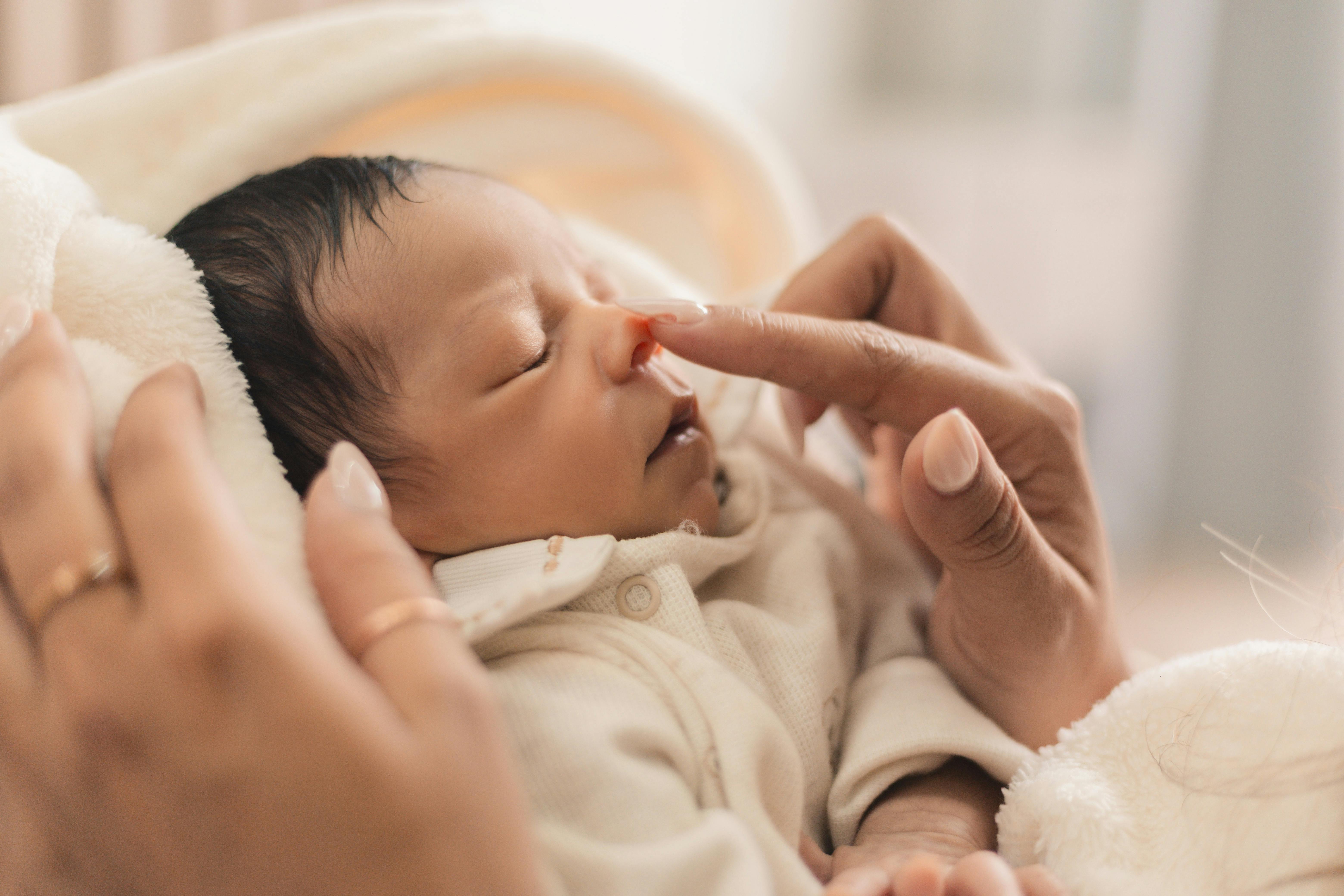
Newborn hearing screening is offered within days of birth in most systems. The timing is driven by what early sound exposure does for language, not by any expectation of a problem.
Language development depends on early input
The parts of the brain that process speech sounds are shaped by the sounds a baby actually hears. That shaping begins immediately and is most rapid in the first year.
Delays in identifying reduced hearing therefore cost developmental time that is difficult to recover later. The window is not closed, but it narrows.
Early identification allows support to begin while that shaping is still under way, which is the entire rationale for screening at birth rather than waiting for concerns.
The tests do not require cooperation
Behavioural hearing tests require a response, which a newborn cannot reliably give. Screening therefore uses physiological measurements instead.
One approach plays a sound into the ear and measures a faint echo produced by the healthy inner ear. The presence of that response indicates the structure is working.
A second approach records the electrical response of the hearing nerve and brainstem to sound through small sensors on the skin. Both can be done while a baby sleeps.
A referral is not a diagnosis
Screening is designed to be sensitive, which means it errs toward flagging rather than missing. A substantial share of babies referred for further testing turn out to hear normally.
Fluid or debris in the ear canal after birth is a common reason for an unclear first result. It resolves on its own and the repeat test is then clear.
Background noise and a restless baby also affect results. Screening is frequently repeated simply because the conditions were not suitable the first time.
Permanent hearing loss varies in kind and degree
Reduced hearing can involve the conducting structures of the middle ear, the sensory cells of the inner ear, or the nerve pathway beyond. The distinction shapes what support helps.
Degree also varies widely, and partial hearing is far more common than total absence. Screening establishes that further assessment is needed rather than what will be found.
Full diagnostic testing by an audiology service follows a referral, and it takes longer because it measures across different frequencies rather than giving a single pass indication.
Screening does not cover later-onset loss
Some hearing loss develops after birth, following certain infections or as a result of genetic conditions that emerge over time. A clear newborn screen does not rule this out.
This is why parental observation continues to matter. A child who stops responding to their name, whose speech development stalls, or who turns volume up markedly is worth reviewing.
Repeated middle ear fluid in early childhood is a common and usually temporary cause of reduced hearing. Persistent concerns belong with a health professional rather than being watched indefinitely.