
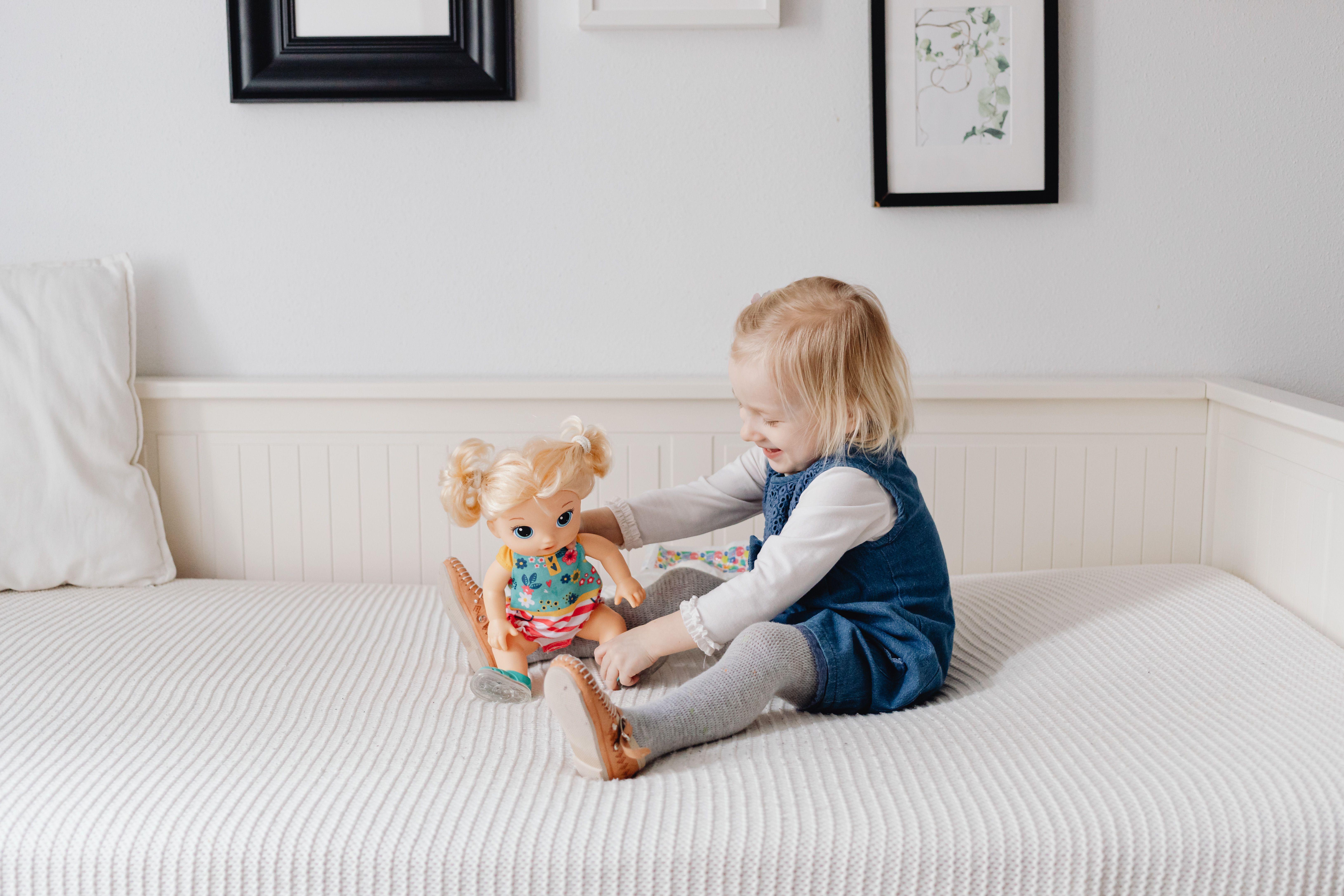
A toddler dropping food from a highchair for the twentieth time is running an experiment. The repetition is not the failure of learning but the method of it.
Repetition is how consistency gets established
A single observation cannot establish whether a result is reliable. The only way to determine that objects always fall is to release many objects many times.
Adults treat gravity as given, so the testing looks pointless. To a child who has not yet established it, each repetition is a data point rather than a repeat.
The behaviour stops when the conclusion is secure. Children abandon this phase without being taught, which is what distinguishes it from a habit.
The variations are the point
The dropping is rarely identical each time. Height changes, the object changes, and the release becomes a throw and then a push over an edge.
Each variation isolates a different factor. A spoon and a piece of bread behave differently on landing, and testing both is how the difference gets attributed to the object.
Surfaces get tested too. The same object dropped onto carpet, tile and a lap produces three different outcomes, which is information about the world rather than about the object alone.
Object permanence is being confirmed at the same time
Something dropped from a highchair leaves the visual field entirely. Watching it be retrieved confirms that it continued to exist while out of sight.
That conclusion is not obvious and has to be built. Dropping produces a controlled disappearance, which is a more useful test than an object simply being taken away.
This is why the retrieval matters to the child as much as the drop. The cycle is incomplete without it, which is precisely why they want it repeated.
Social response is a second experiment running alongside
The adult reaction is itself a result. Whether the object is returned, whether attention is given and whether the response is the same each time are all being observed.
Once the physical question is settled, the social one usually continues, which is where the behaviour starts to feel deliberate to the adult.
Distinguishing the two phases explains why the response that ends it changes. Consistent, low-key handling ends the social version, and nothing ends the physical version except its completion.
Where this fits in what develops next
Testing cause and effect through repeated action underlies later understanding of how objects behave, and the same pattern reappears with pouring, stacking and rolling.
Containment and trajectory investigations follow closely: putting things into containers, posting them through gaps and pushing them down slopes are the same method applied to new questions.
Providing materials that answer these questions safely tends to reduce the version that involves dinner. The investigation continues either way, and only the equipment changes.