
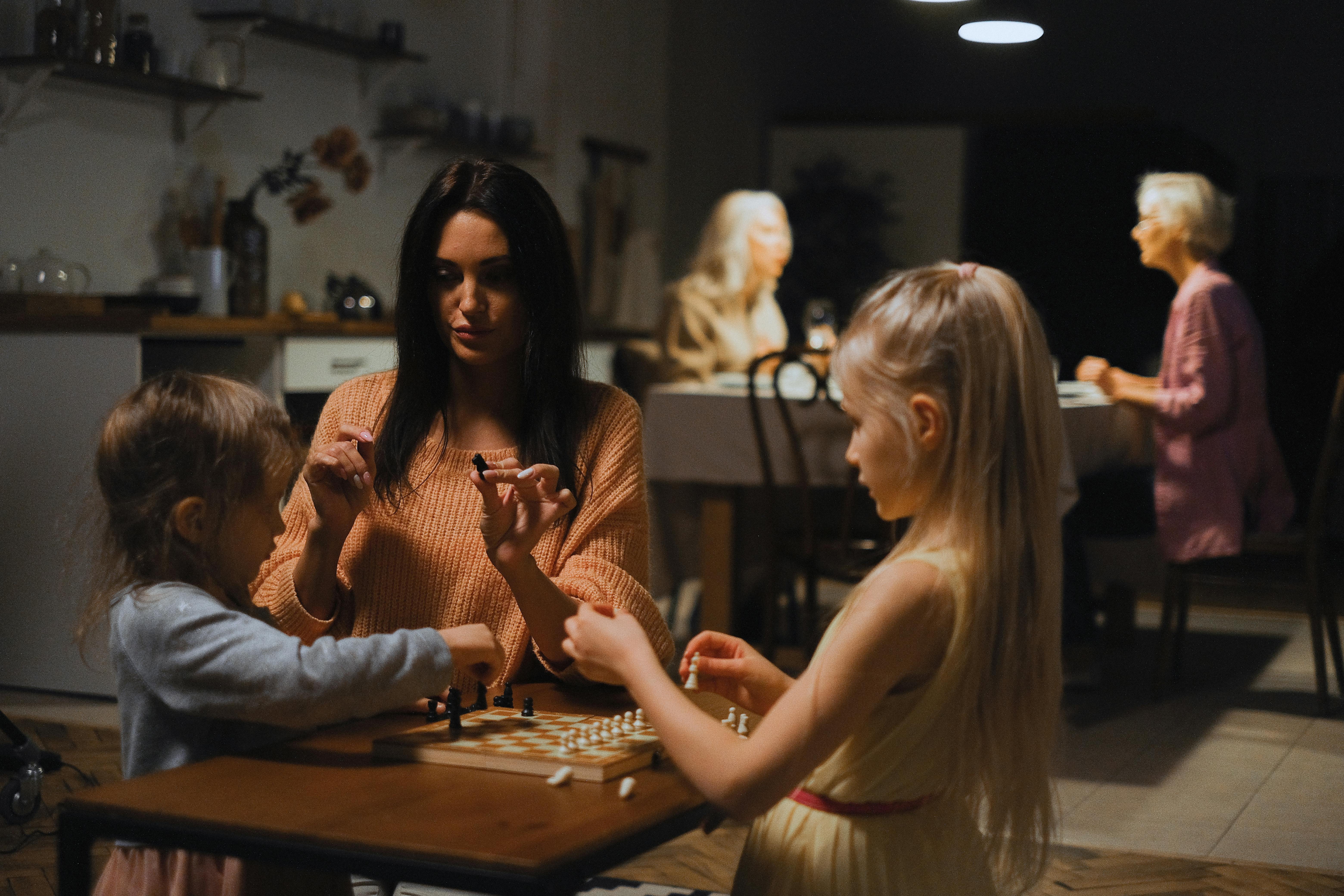
Siblings in the same move often react in ways that seem unrelated to each other. The move disturbs a different system at each age, and the visible response follows from which system was hit.
For toddlers the disruption is physical and sensory
Very young children map their world through fixed physical arrangements: where the light comes from, which door leads where, how the room sounds at night. A move dismantles all of it at once.
Sleep is usually the first casualty, because falling asleep depends heavily on familiar cues. The regression is generally short and resolves as the new arrangement becomes predictable.
Keeping the sequence of the day and the bedding identical does more here than explanation does. The child is not processing the concept of moving, only the loss of a known environment.
School-age children lose the social scaffolding
By primary age, friendships and position in a class have become the main source of stability outside the home. Moving removes both simultaneously and replaces them slowly.
Academic dips after a move are common and often mistaken for a new difficulty. Curriculum sequencing differs between schools, so a child can land mid-topic in material they were never taught.
Recovery here depends heavily on how quickly the child gets a foothold in a group. Clubs and activities that meet weekly tend to do more than efforts arranged at home.
Teenagers lose standing, which is harder to rebuild
Adolescents have usually accumulated a reputation, a role in a friendship group and a set of arrangements they built themselves. That accumulation does not transfer.
Starting again at fifteen means entering groups that formed years earlier and have no vacancy. The effort required is real and the timescale is longer than parents expect.
This is why teenagers frequently oppose moves that younger siblings barely register. The cost genuinely is higher for them, and describing it as an adjustment understates what has been lost.
The parents' state feeds into the children's
Moving concentrates financial strain, logistical load and uncertainty into a few weeks. Adults are least available exactly when children need most explanation.
Children read the household mood before they read the situation. A move framed calmly and one framed as a crisis produce different reactions to identical circumstances.
Settling the adults' routine early therefore pays back. The household reaching a stable rhythm matters more to children than the boxes being fully unpacked.
What the settling period actually looks like
The visible upheaval usually eases within weeks while the underlying adjustment runs for much longer, often the better part of a year for school-age children.
Late reactions are common and confusing. A child who coped well through the move can struggle months later, once the novelty has gone and the absence of old friends becomes ordinary.
Persistent low mood, withdrawal or anxiety that does not ease belongs with a professional rather than being attributed to the move indefinitely. Moving explains a period of difficulty, not an unending one.